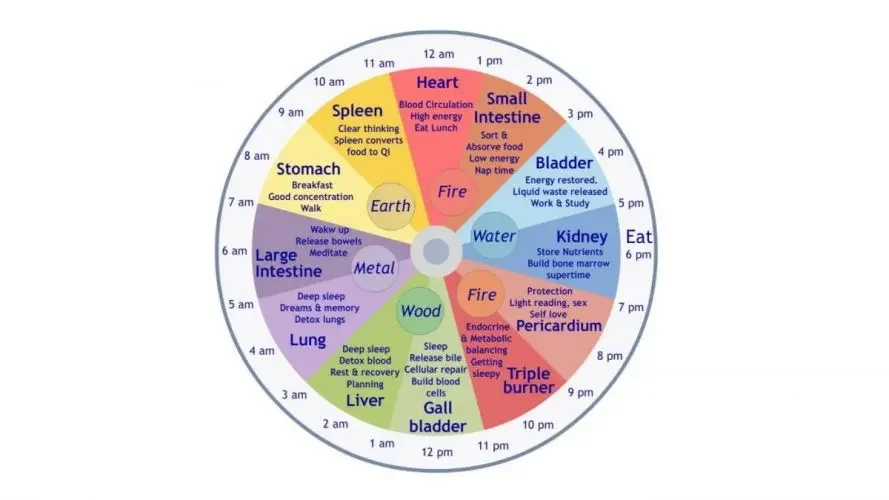
In Traditional Chinese Medicine, your body is not just a collection of systems. It is a rhythmic and intelligent network that follows a natural 24-hour cycle known as the TCM Body Clock. I’m a big fan of this system. Basically each organ system has a two-hour window when its energy, or Qi, is at its peak. So by aligning our daily habits like eating, sleeping, and exercising with this internal rhythm, we can support better digestion, deeper sleep, balanced energy, and overall health. It is a simple yet powerful way to check in with your body. If you enjoy learning about how your body works from a Traditional Chinese Medicine perspective, there are some great resources to explore. The Body Clock in Traditional Chinese Medicine is a simple place to start, while books like The Web That Has No Weaver go deeper into the philosophy behind it.
Here is a simple body clock guide to help you live in sync with your body:
5 to 7 AM | Large Intestine
This is your body’s natural detox time. It is helpful to wake up between this time and allow time for a bowel movement. Drinking warm water and keeping a consistent morning routine can support healthy elimination.
7 to 9 AM | Stomach
This is the best time to eat your largest meal! Your digestive system is strongest now, which makes it easier to break down and absorb nutrients. Please note: skipping breakfast or eating something very cold or light can drastically weaken digestion over time.
9 to 11 AM | Spleen
The Spleen supports digestion and energy production in TCM. This is a great time for focus and productivity. Try to limit excess sugar or constant snacking, as this can lead to fatigue or brain fog.
11 AM to 1 PM | Heart
This is a time when circulation and mental clarity are strong. It is a good time for connection, conversation, or a mindful lunch. Eating a moderate meal but not too heavy, can help you stay energized through the afternoon.
1 to 3 PM | Small Intestine
Your body continues to sort and absorb nutrients. Light activity or focused work fits well here. If you notice a drop in energy, it may be helpful to look at your digestion and meal timing.
3 to 5 PM | Bladder
Energy tends to pick up again. This is a good time for movement, exercise, and hydration. Many people feel their strongest physically during this window.
5 to 7 PM | Kidneys
The Kidneys store your deeper reserves of energy. This is a time to begin slowing down. Gentle movement like walking or stretching, especially after a busy day at work, can be supportive. A simple and nourishing dinner is ideal here too.
7 to 9 PM | Pericardium
This is a time for relaxation and connection. Calming activities can help regulate your nervous system. It is helpful to reduce stimulation, start to dim the lights, and begin preparing for rest.
9 to 11 PM | San Jiao
Your body begins preparing for sleep and regulating hormones. Being in bed during this time can support recovery and balance.
11 PM to 3 AM | Gallbladder and Liver
This is when deeper repair and detox processes occur. Consistent sleep during these hours supports hormone balance, emotional health, and overall vitality.
~
What I typically see in Clinic
I often see these patterns reflected in my patients. Some people wake up regularly between 1 and 3 AM. This is connected to Liver time in TCM. These patients are often dealing with stress or feel restless at night. When we support their system and help them create an earlier and calmer evening routine, their sleep usually becomes more consistent.
Others tell me they are not hungry in the morning but feel a strong energy crash around 10 or 11 AM. This can be a sign that the Stomach and Spleen need support. When they begin eating a warm and steady breakfast, even in small amounts at first, their energy often becomes more stable and cravings decrease.
I also work with many people who exercise late at night because that is the only time available to them. While this is understandable, intense activity late in the evening can make it harder for the body to settle into sleep. When they shift movement earlier in the day, even slightly, they often notice better sleep and recovery.
A Few Supportive Ways to Work With Your Body
Focus on warm, cooked foods earlier in the day to support healthy digestion
Try to eat most of your calories in the first half of the day rather than late at night
Incorporate regular movement throughout your day to support digestion, hormone balance, and sleep
Get natural morning light in your eyes without sunglasses when possible to help regulate your internal rhythm
Aim to be asleep by 11 PM to support deeper repair and recovery
Create a simple evening routine such as dimming the lights or gentle stretching to help your body unwind
When meals are late, mornings are rushed, or sleep happens after midnight, the body has to work harder to keep up. Over time, this can contribute to fatigue, poor stress response, hormone imbalances, digestive discomfort, and feeling just off. Small and consistent changes can make a meaningful difference. Eating a nourishing breakfast, moving your body regularly, and getting to bed earlier can support how you feel day to day. You do not have to do this perfectly. Even a few small shifts can help your body function more smoothly.
Your body is always working to support you. When you align with its natural rhythm, it becomes easier to feel steady, rested, and well.
If you are dealing with low energy, digestion concerns, or sleep issues, acupuncture and herbal medicine can help support your system and bring things back into balance.