Period Pain Relief
If you’ve been told that painful periods are just something you have to deal with, you’re not alone. But that doesn’t make it true. Period pain is common, yes. But it is also a sign that something in the body is not flowing or functioning as smoothly as it could be. When we understand what is actually happening beneath the surface, we can start to shift it.
At the most basic level, period pain is driven by inflammation. When inflammation is higher in the body, it increases the production of compounds called prostaglandins. These are responsible for triggering the uterus to contract so it can shed its lining each month. The problem is, when prostaglandin levels are too high, those contractions become stronger and more painful than they need to be. Hormones also play a major role here, especially estrogen. When estrogen levels are elevated or not being properly metabolized, the uterine lining can become thicker than usual. This creates more work for the body during menstruation, which often translates into more intense cramping. This is where the liver becomes especially important. The liver is responsible for processing and clearing excess hormones, including estrogen. When it is supported and functioning well, hormone balance tends to feel much smoother. This connection is something both Western physiology and Chinese medicine recognize, even if they describe it differently. Of course, period pain is not always this simple. Sometimes it is a symptom of deeper conditions such as:
Endometriosis
Adenomyosis
Fibroids
Ovarian cysts
If your pain is severe, worsening, or interfering with your daily life, it is important to work with your OBGYN to rule out anything more complex. Think of this as a foundational understanding, not a diagnosis. From a Chinese medicine perspective, period pain always comes back to one idea: stagnation. When something is stuck, whether it is Qi, Blood, or even unprocessed emotional tension, pain arises. The body is incredibly intelligent, and pain is one of the ways it signals that flow has been disrupted. So the goal is not just to manage pain. It is to restore movement where things feel stuck, nourish what has been depleted, and calm the internal environment so inflammation can settle. When you start to view your cycle through this lens, it becomes less of a random monthly event and more of a rhythm you can actually work with.
Your cycle begins on the first day of your bleed. This is the body shedding the uterine lining and beginning the process of rebuilding. In Chinese medicine, this is a time to replenish, especially when it comes to Blood and Yin. As you move into the follicular phase, your body gradually builds again. Hormones begin to rise, follicles mature, and the uterine lining thickens in preparation for ovulation. This phase often feels lighter and more outward. Internally, it reflects a transition from Yin, which is more restorative and cooling, toward Yang, which is more active and warming. Ovulation marks a brief but important turning point. It is only one day, but the window around it represents your peak fertility. The body shifts quickly here, and smooth transitions matter. When things do not move well in this phase, it can set the stage for symptoms later on. Then comes the luteal phase, the two weeks leading up to your next period. This is where there is often the biggest opportunity to influence how your period will feel. During this time, the body is making a decision to support a potential pregnancy or prepare to menstruate again. Hormones fluctuate more dramatically, and if there is underlying stagnation or inflammation, it tends to show up here first. This can look like PMS, breast tenderness, irritability, or bloating. From a Chinese medicine perspective, this is when Qi and Blood need to move freely. When they do not, that is when pain begins to build before the period even starts. What you do during this phase matters more than most people realize.
The body responds especially well to warmth during the luteal phase. Warm, cooked foods, herbal teas, and heat applied to the abdomen help keep circulation moving. On the other hand, excessive cold such as iced drinks, raw foods, or cold exposure can constrict flow and make stagnation worse. It is a small shift, but it can make a noticeable difference over time. This phase is also less about pushing and more about supporting. Gentle movement like walking, stretching (the inner groin and outer hip area especially), or yoga helps keep things circulating without depleting your energy. At the same time, it is important to honor the natural slowdown your body may be asking for. There is also an emotional component here that often gets overlooked. The days leading up to your period can bring heightened awareness, sensitivity, or frustration. Rather than dismissing that, it can actually be useful information. In many ways, it is a time when the body is less tolerant of what is not working, both physically and emotionally. Giving yourself space to process, reflect, or set boundaries can have a real impact on how your body feels.
Outside of specific phases, your overall hormonal health is shaped by your daily rhythms. Stable blood sugar, enough protein, healthy fats, quality sleep, and nervous system regulation all play a role in reducing inflammation and supporting smoother cycles. Even simple habits can make a difference:
Eating breakfast before coffee
Get to bed before 11 pm
Take a few minutes each day for deep breathing or quiet time
Food choices matter too, especially from a Chinese medicine perspective. Warm, easy-to-digest meals tend to support the system more effectively than cold or raw foods, particularly if you already experience pain or fatigue. It can also be helpful to regularly include blood-building foods such as:
Leafy greens
Beets
Eggs
Bone broth
Acupuncture and Chinese herbal medicine take this a step further by working directly with the body’s regulatory systems. Acupuncture helps balance the hormonal axis, improve circulation, and reduce inflammation. Herbal formulas are tailored to your specific pattern, which is why they can be so effective when used consistently over a few cycles. In some cases, targeted supplements can be helpful depending on your individual needs. A few commonly used options include omega-3s, magnesium glycinate, and ginger capsules. More personalized supplementation protocols can be developed with a functional medicine provider, your primary care provider, or through lab-based assessment when appropriate.
Simple Acupressure for Period Pain
While deeper work like acupuncture and herbal medicine addresses the root, there are also simple ways to support your body at home. Acupressure is a gentle, accessible way to encourage movement and reduce discomfort using the same channels we work with in acupuncture. You can apply steady, comfortable pressure to each point for about one to two minutes twice a day while breathing slowly. This can be done daily in the days leading up to your period or during cramps.
A few points that tend to be especially helpful:
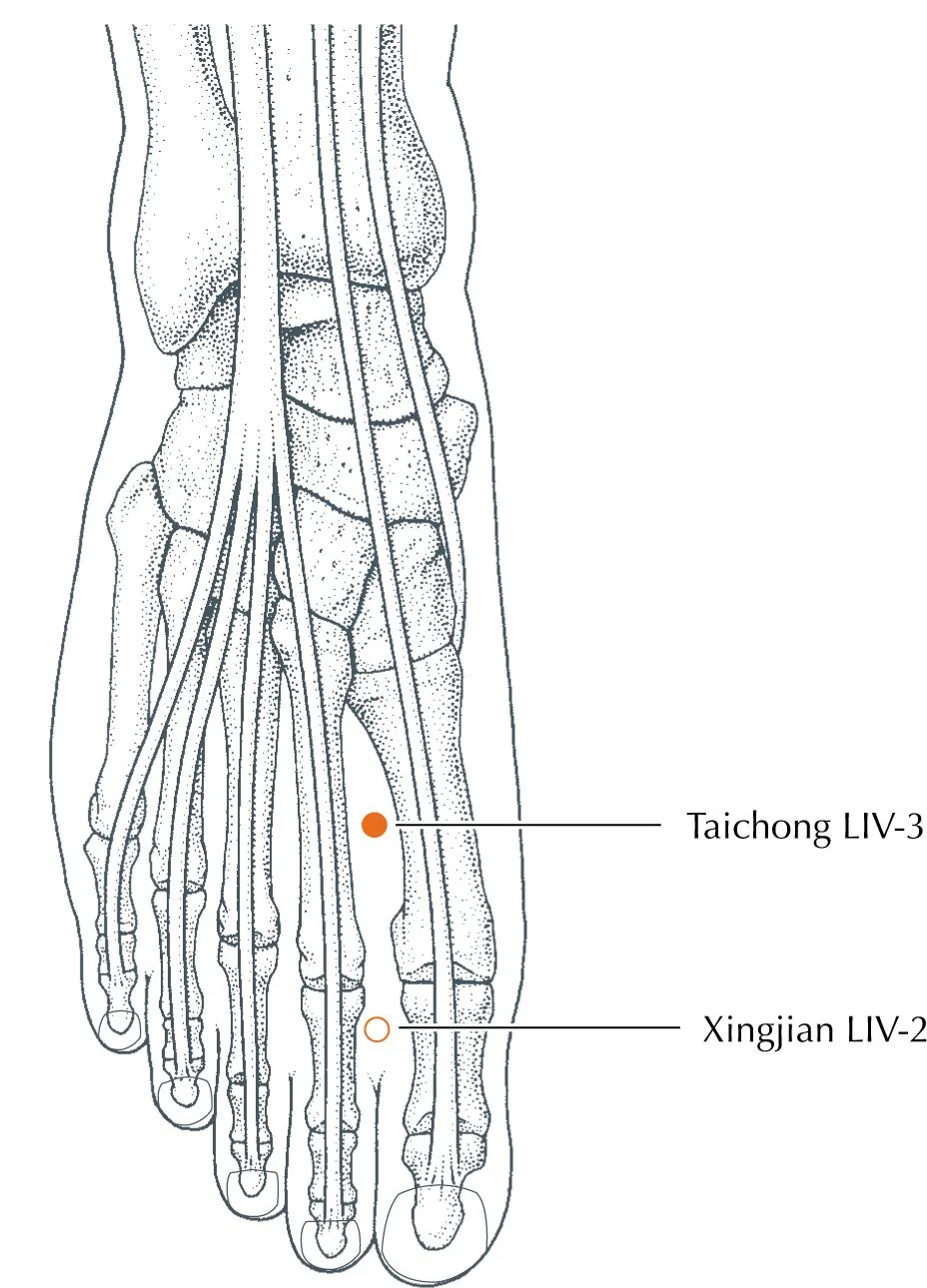
Liver 3 (LV3)
On the dorsum of the foot, in the hollow distal to the junction of the first and second metatarsal bones. Located between the first and second toes. This point helps move stuck Qi, ease tension, and reduce irritability and pain.Spleen 8 (SP8)
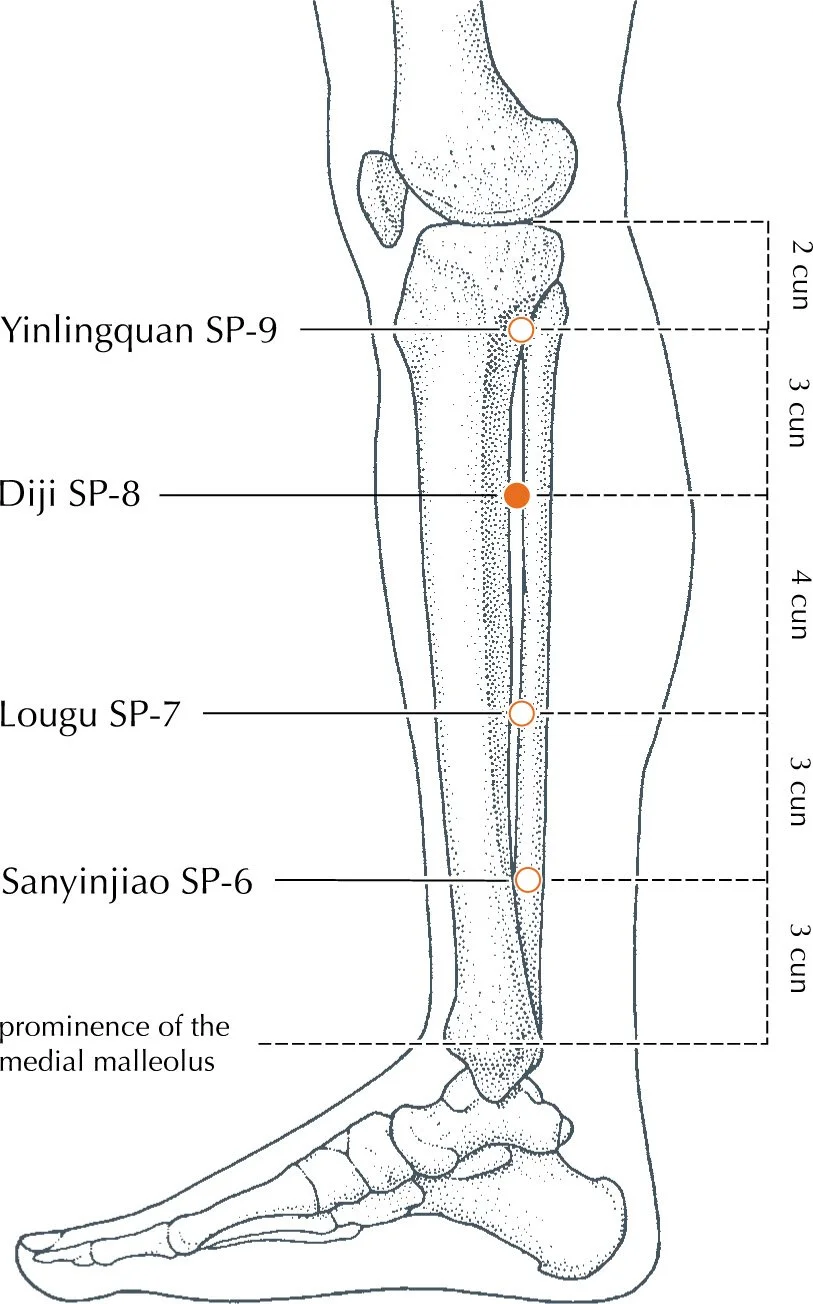
Found about four fingers below the inside of the knee. On the medial side of the lower leg, just posterior to the medial crest of the tibia. This is a go-to point for acute cramping and improving blood flow.Gallbladder 34 (GB34)
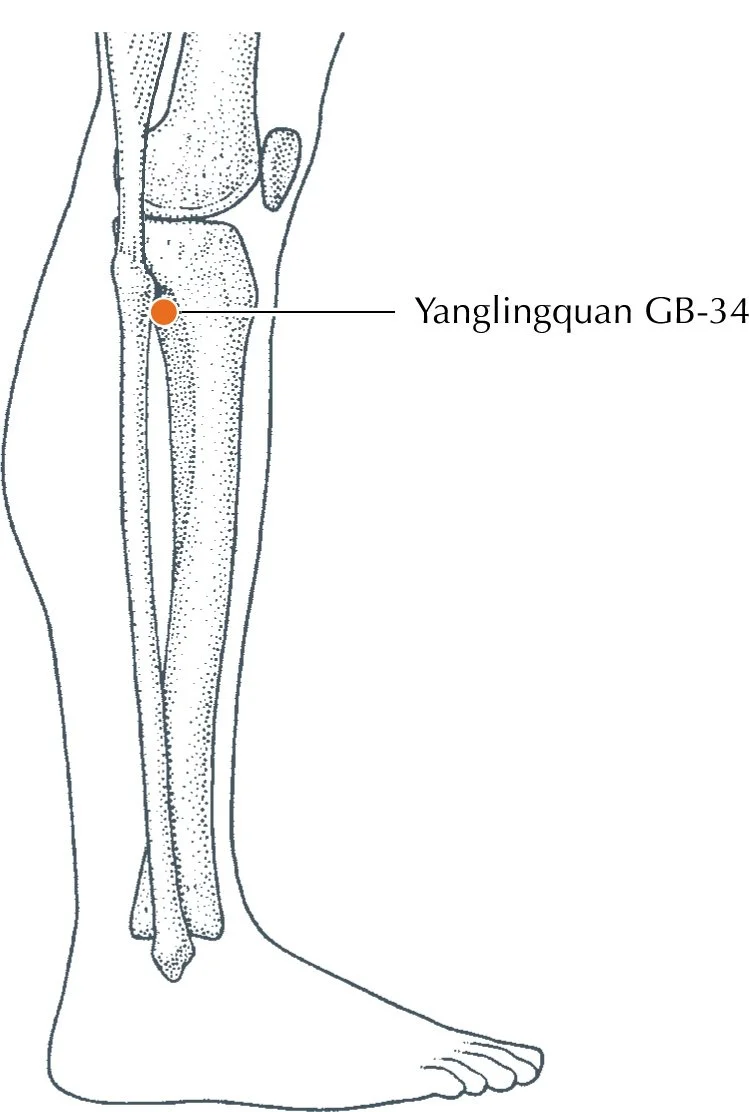
Located just below the outside of the knee. Below the lateral aspect of the knee, in the tender depression approximately 1 inch anterior and inferior to the head of the fibula. This point helps relax the lower body and supports smoother overall movement.
You can use these on their own or together depending on what your body needs.
Photos below will help you locate each point more easily.